The seat
UX lead on the post-acquisition rebuild.
Phenom
UX lead for research, flows, and the simplification
1 UX designer · 1 UI designer
The gap
A CRM that could do everything except book the interview.
Phenom CRM already captured leads, sent email and SMS, held the candidate record, and tracked activity. Competitive review across customers showed the hole: there was no decent way to schedule the interview. Recruiters bounced between candidates and interviewers until a slot survived.
Put scheduling inside the CRM, so the interview is as ordinary as the email that sets it up.
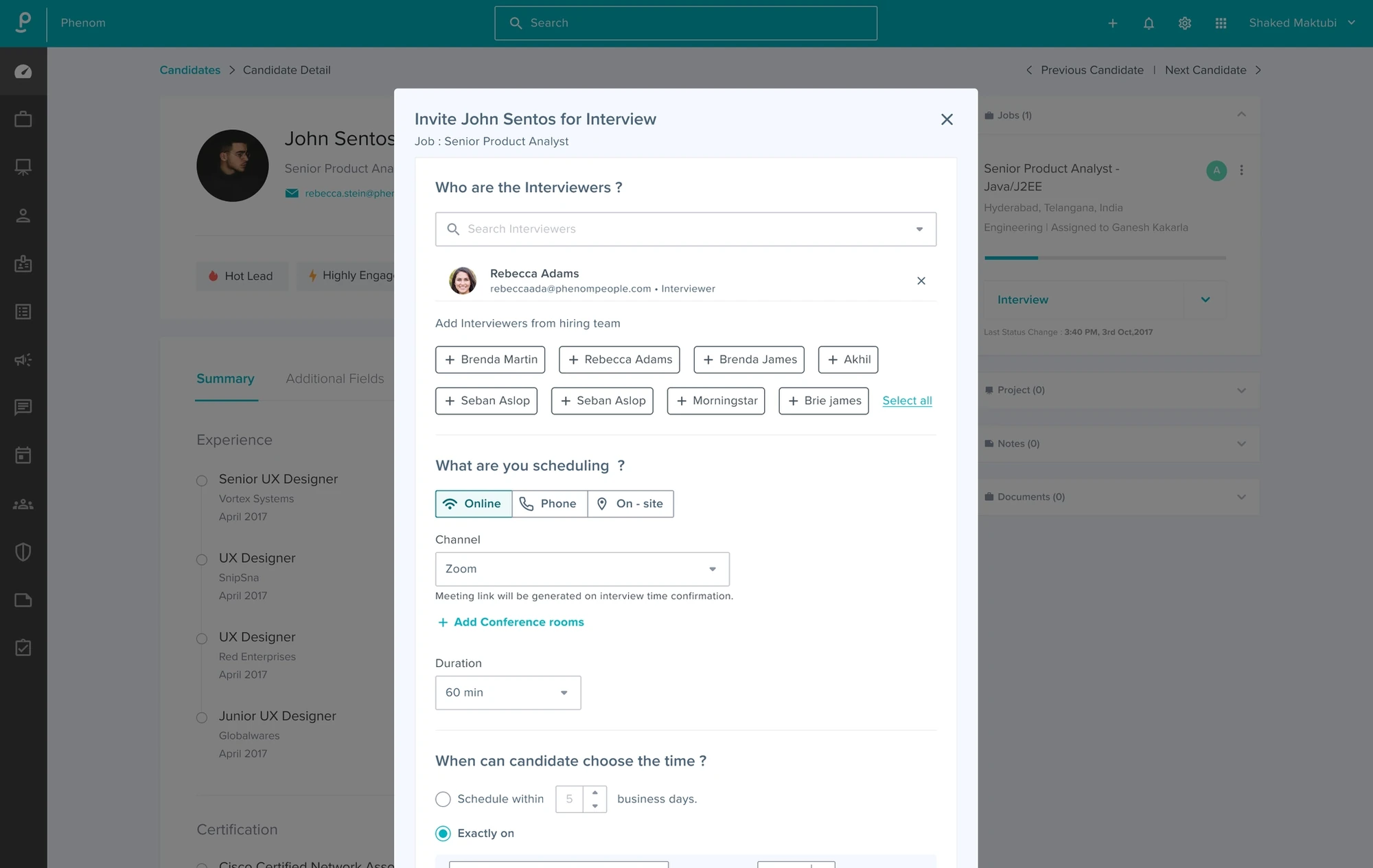
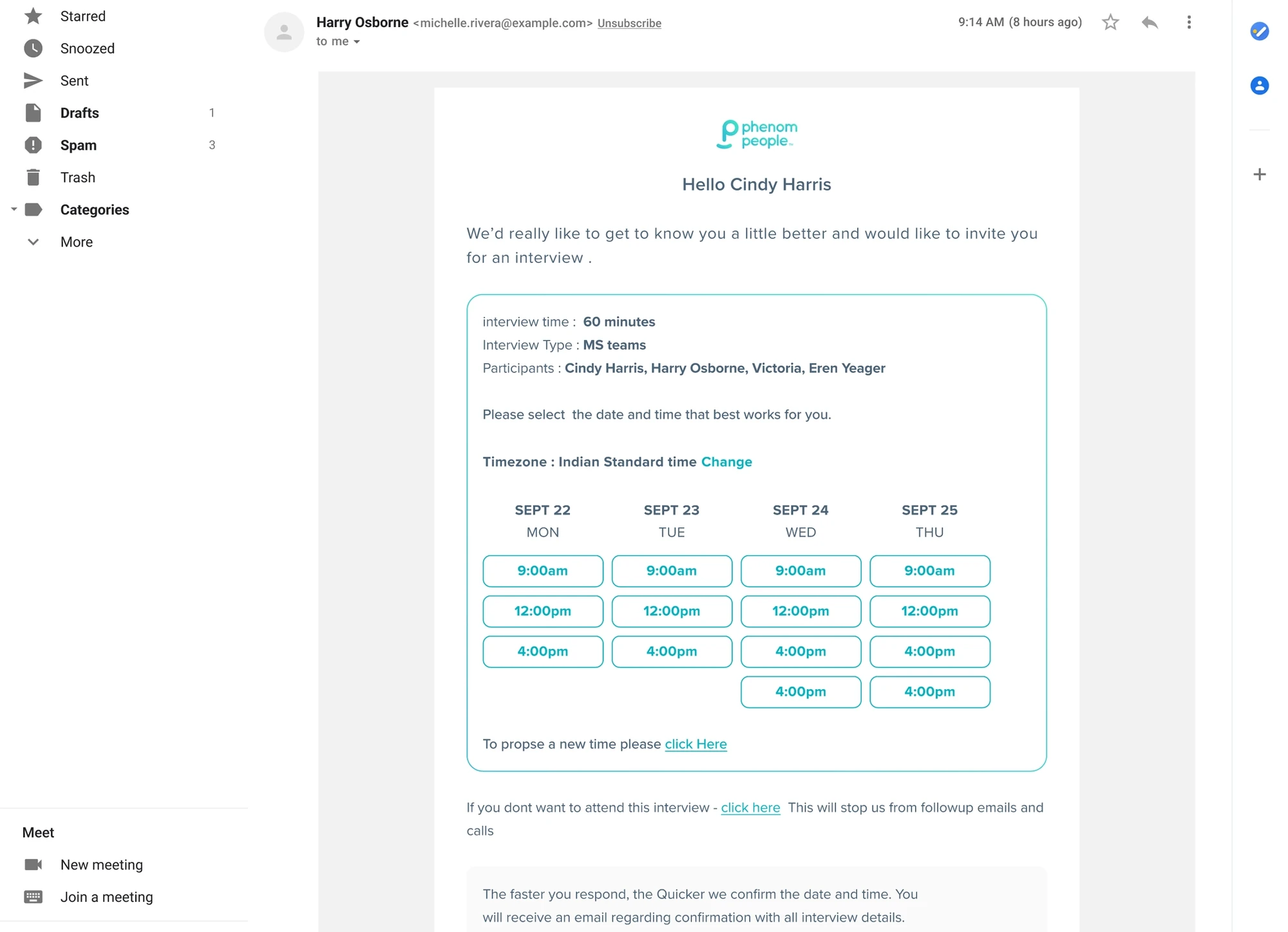
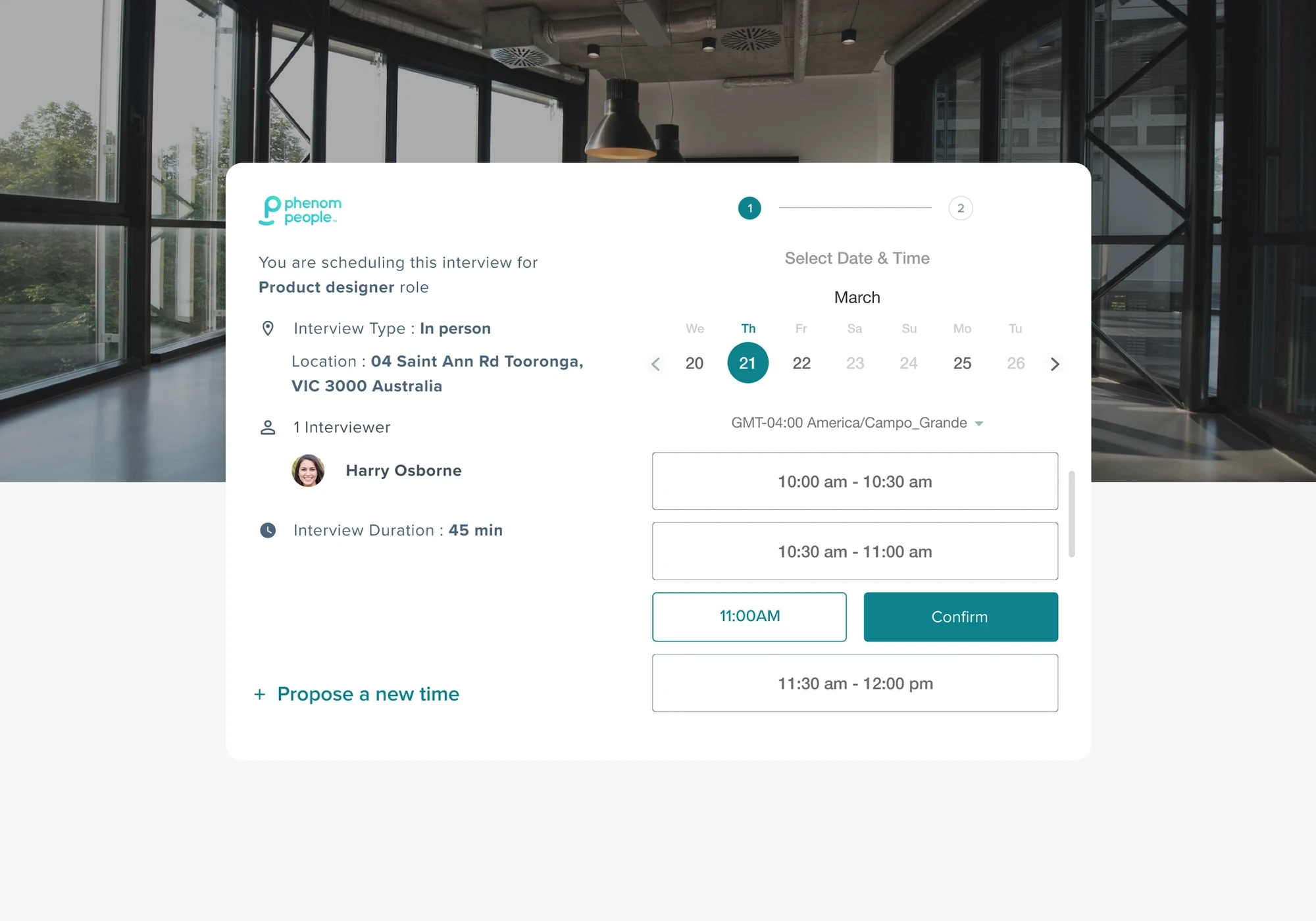
Three promises. Candidate-first slots: overlapping free time from interviewer calendars, and the candidate picks. Propose another time if none of it works. Reschedule or cancel without a scavenger hunt.
The mess
MyAlly was acquired. The workflow was not.
Phenom acquired MyAlly, a scheduling product with AI that could answer candidate email. We assumed an established product could be dropped in. It couldn’t. The post-acquisition version didn’t fit how customers actually worked. Adoption was barely there.
We sat with 5 employees across customer organisations. Four things, said plainly:
Too technical
The tool created friction in the recruiter’s day instead of removing a loop.
No trust
Notifications were missed. The AI wasn’t trusted enough to lean on.
Candidate experience is the product
Speed, and zero glitches. Customers were unsentimental about this.
Some needs are heavier
University recruiting and other advanced setups wanted more configuration than a simple invite.
The simpler product
Less machinery. More proof the invite is right.
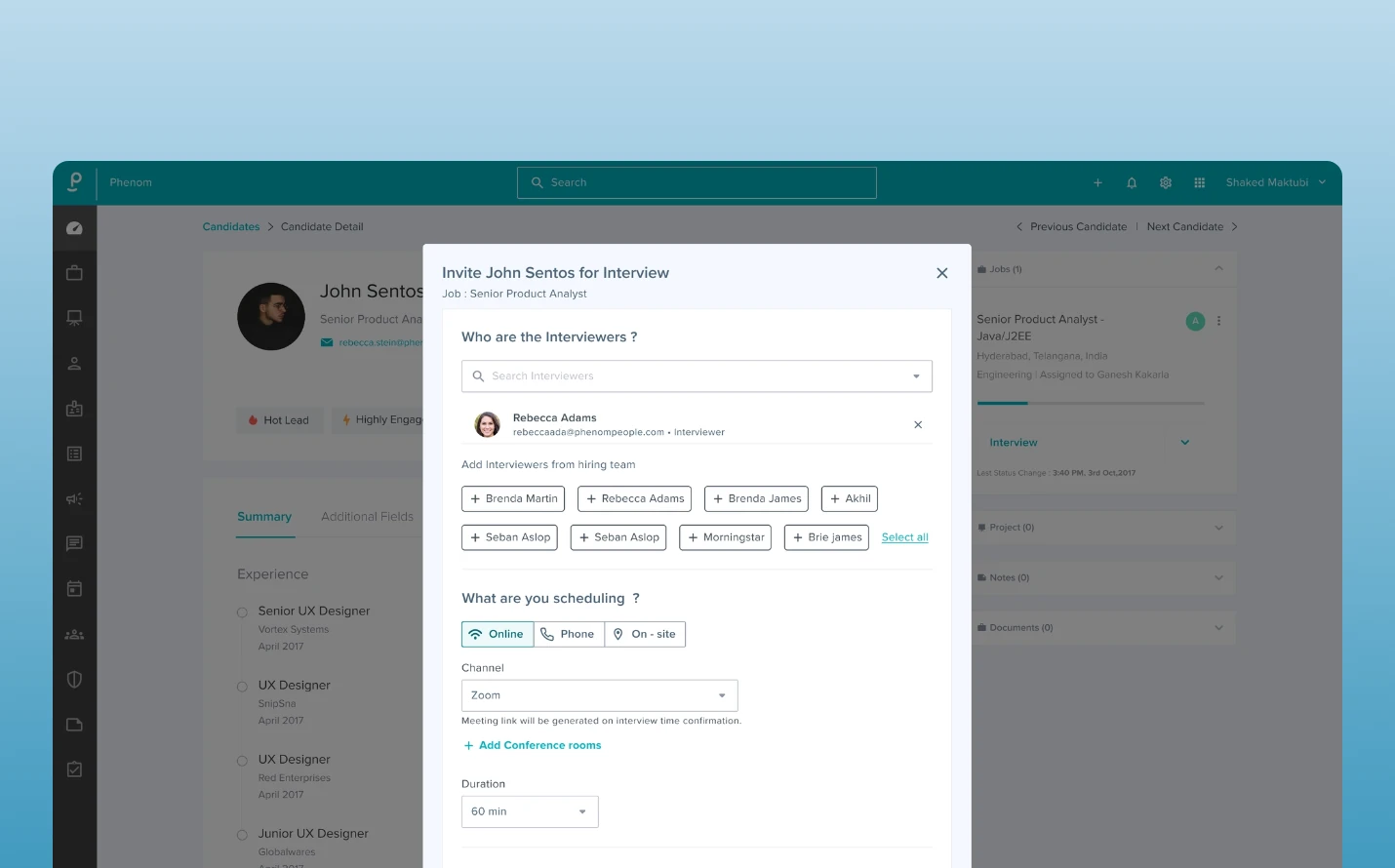
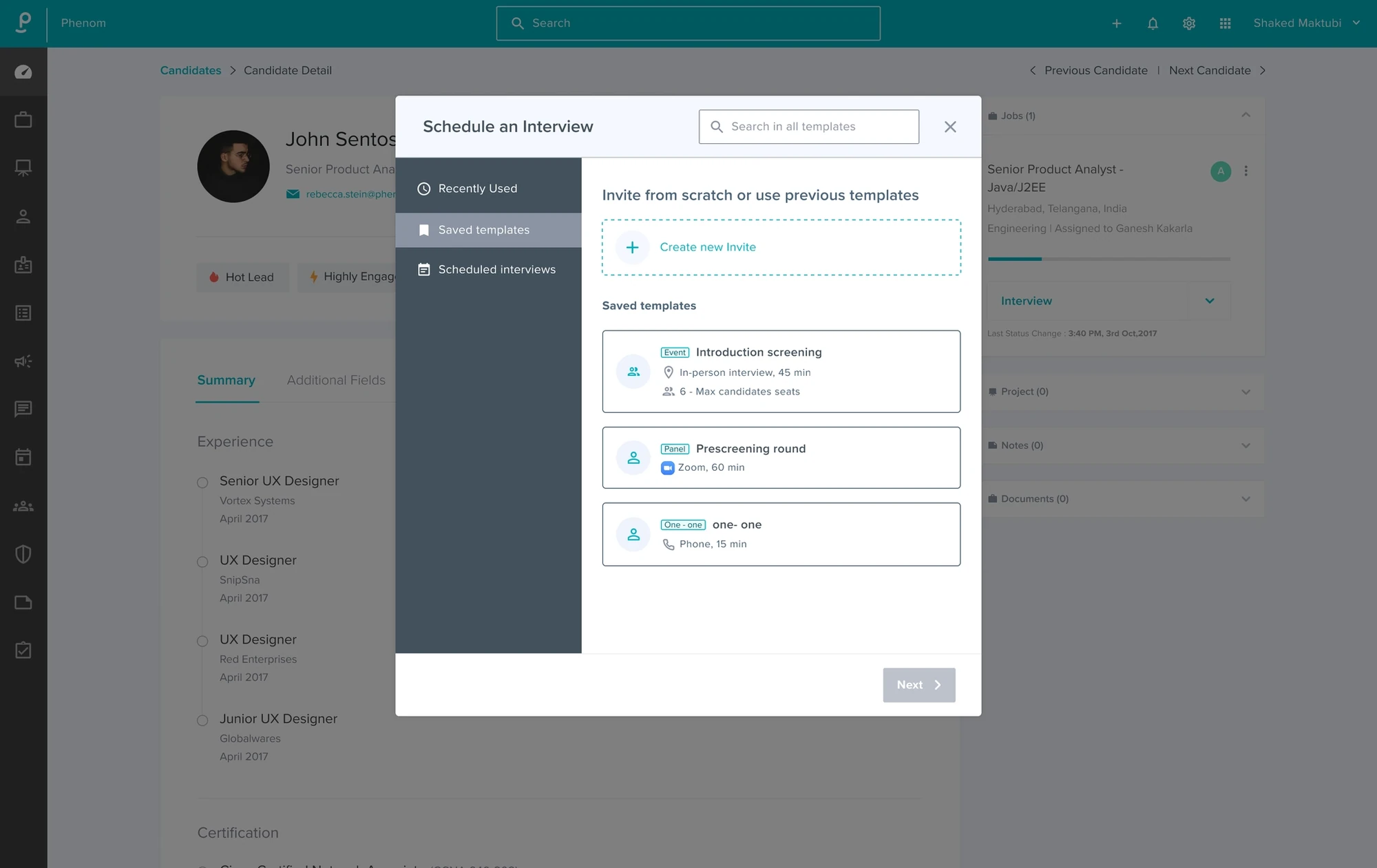
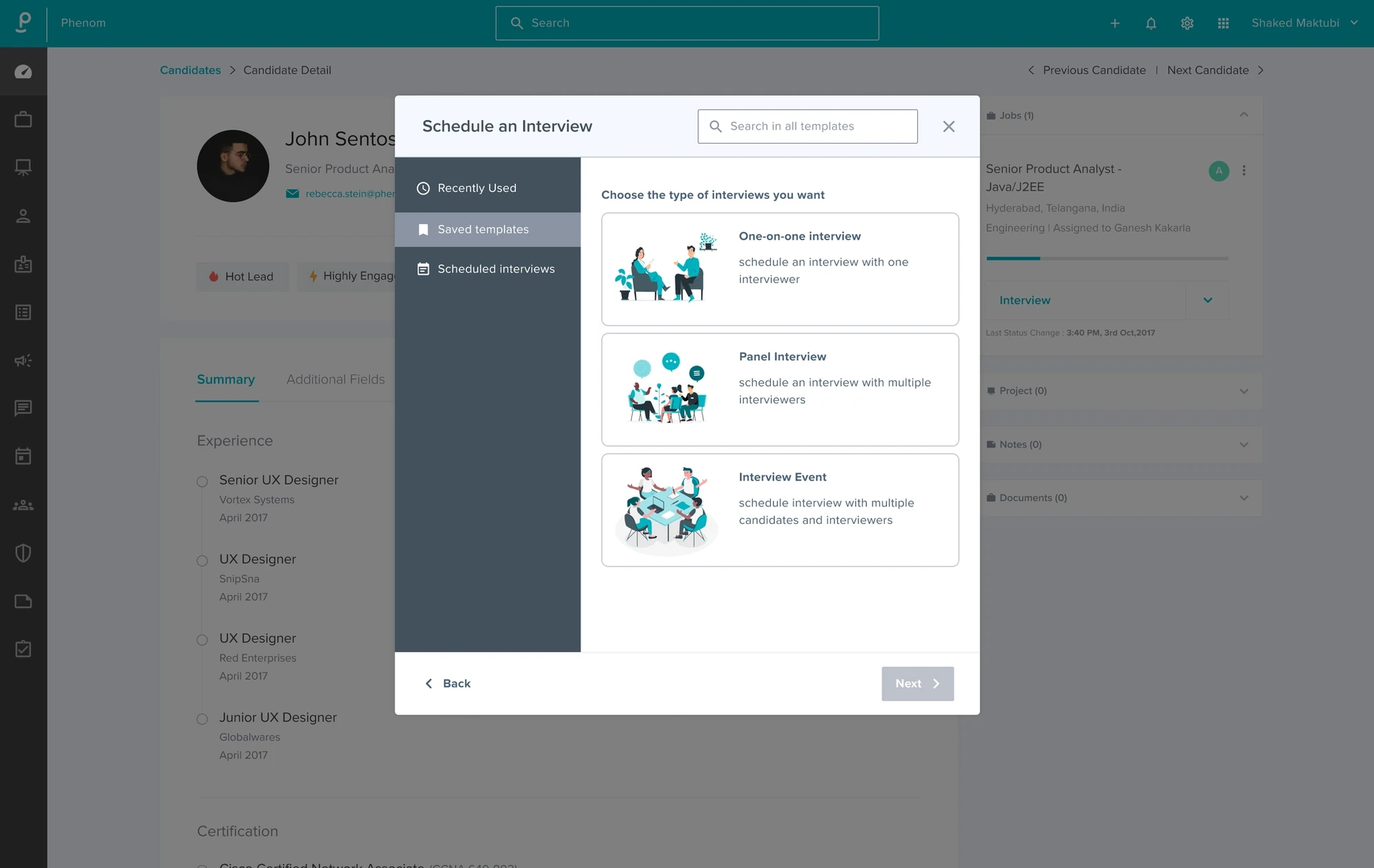
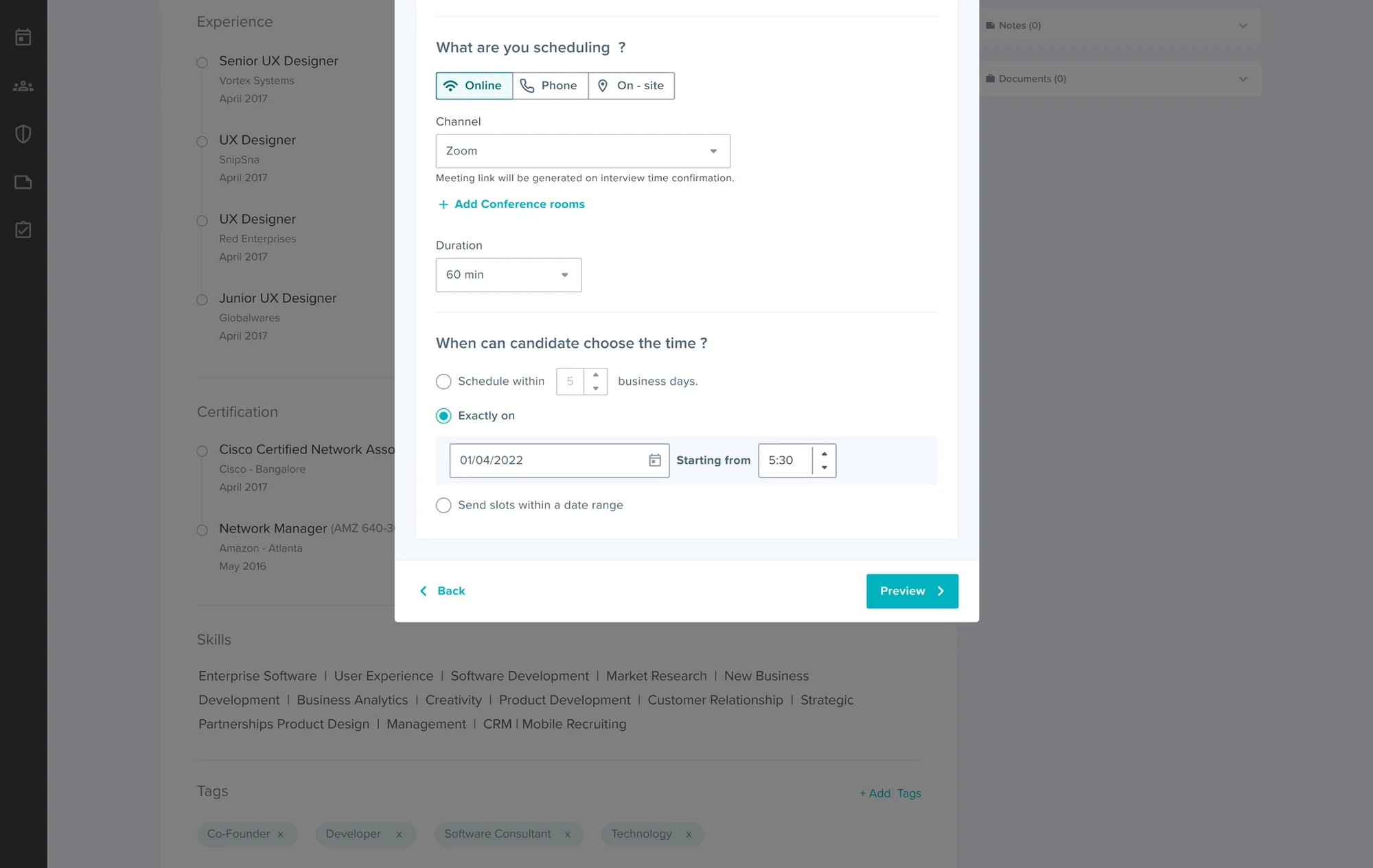
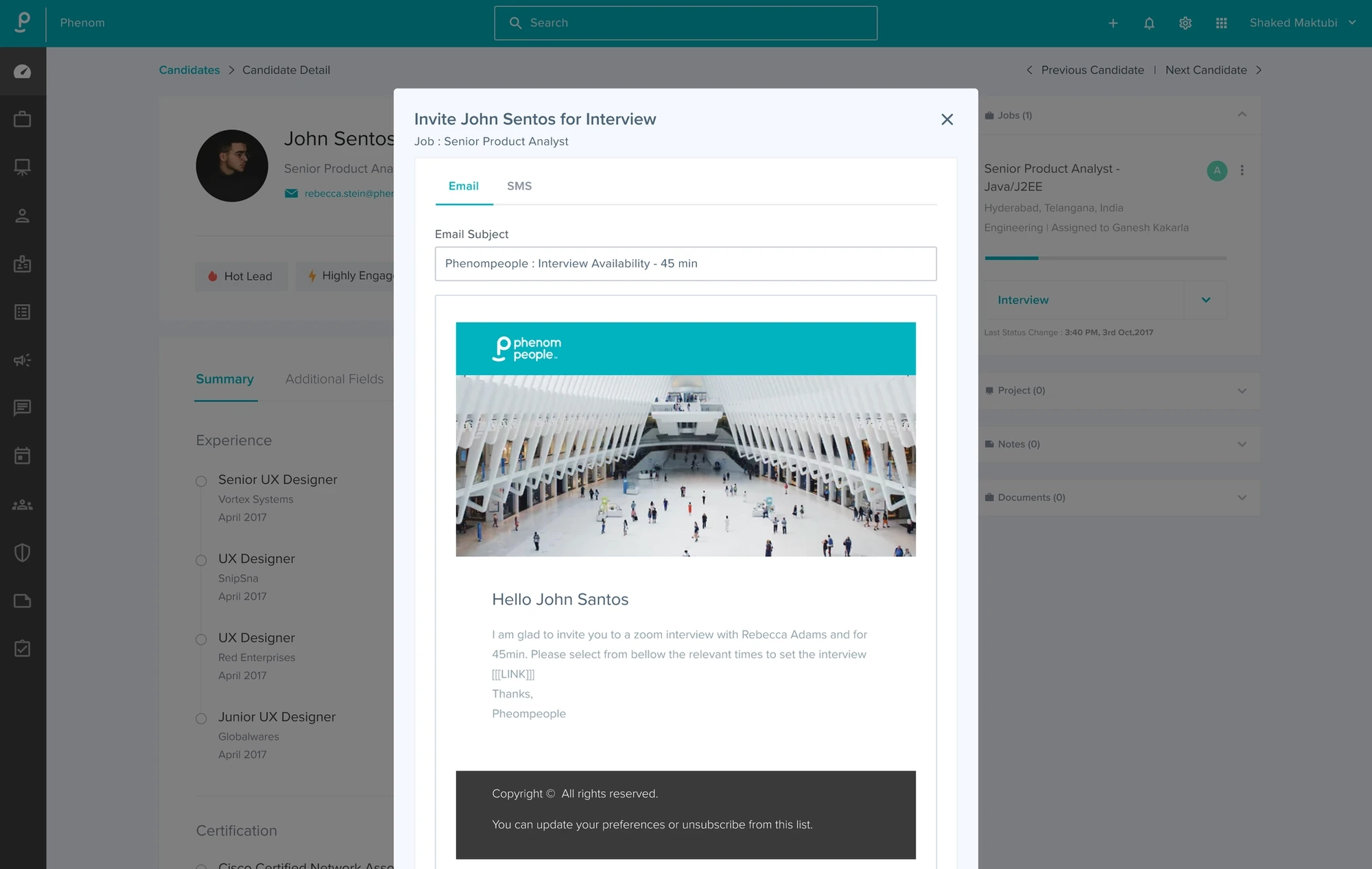
After testing, we designed the version that recruiters could run without a specialist: templates or a blank invite, format and parameters up front, interviewers and slots and rooms in one place, calendar availability pulled in, and a preview of exactly what the candidate receives. That preview was a direct ask from the sessions.
On the candidate side: an email that explains the next step, a mobile slot picker with no login, and a confirmation with the interviewer, the time, the format, calendar links, and a way to reschedule or cancel.
Validation
Six recruiters. The issues that remained were small.
Usability testing with 6 recruiters said the redesign had addressed the four pains from research. What was left was minor, and fixable. That was the signal to proceed. Not a victory lap. A reason to build.
What I’d tell another lead. Conviction about how a product will actually be built has to come early. “We’ll just incorporate the acquisition” is not a strategy, and it backfired. Acquisitions are messy on the ground: unclear direction, a lot of noise, and the work of making something good anyway. After a miss, usability testing is how you stop the next version becoming an expensive theory.
Insights, from a fresh coat of paint to $5M.
Open it